Tear-off
Removal exposes the underlying assembly and deck. It allows wet or unsuitable material to be removed and the new roof to begin from the agreed base.
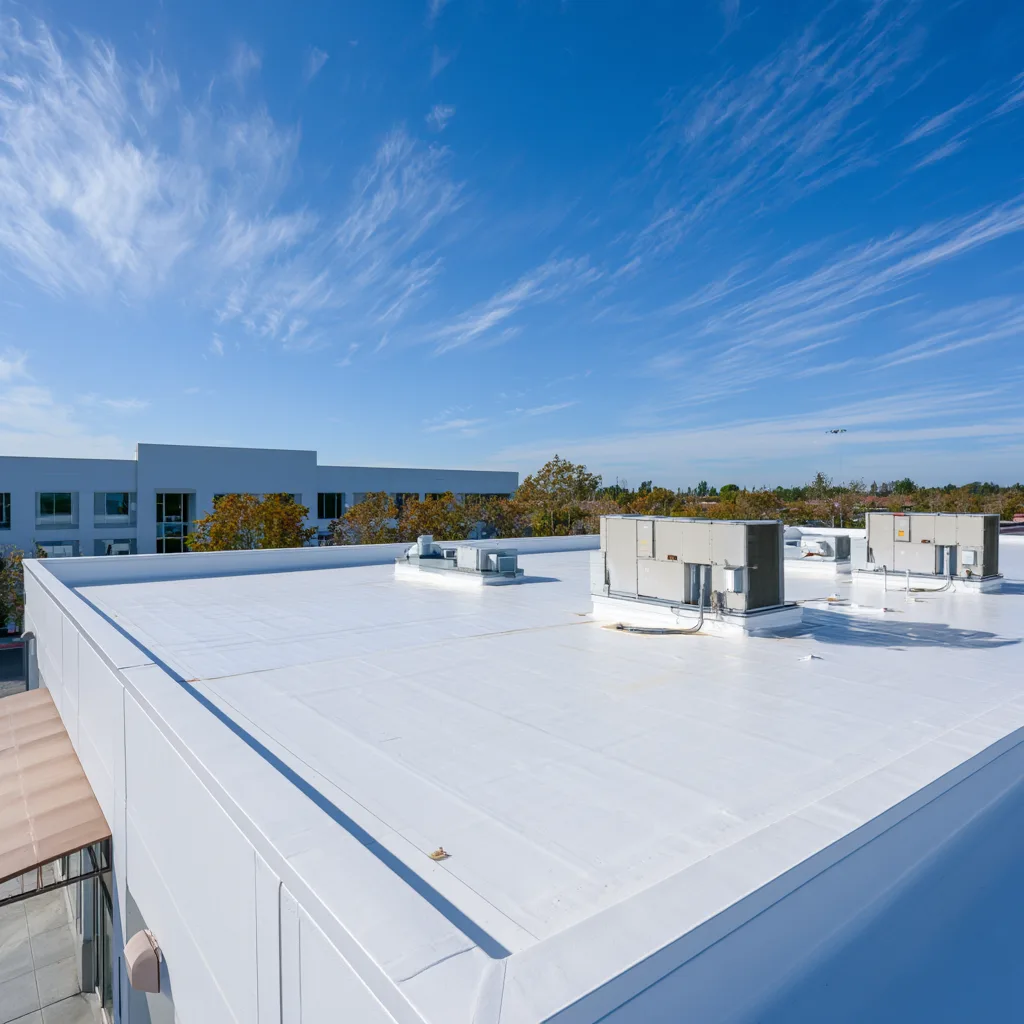
A low-slope replacement is a building-envelope project. The new covering, insulation, attachment, drainage and equipment details need to work as one assembly.
A roof that has widespread deterioration, trapped moisture or repeated failures can reach the point where repair no longer resolves enough of the problem. Replacement planning should establish the condition of the existing layers and supporting deck before choosing the new system.
For an occupied building, the site sequence matters too. Delivery routes, openings, tenant activity and equipment work can affect how the project is divided and protected.
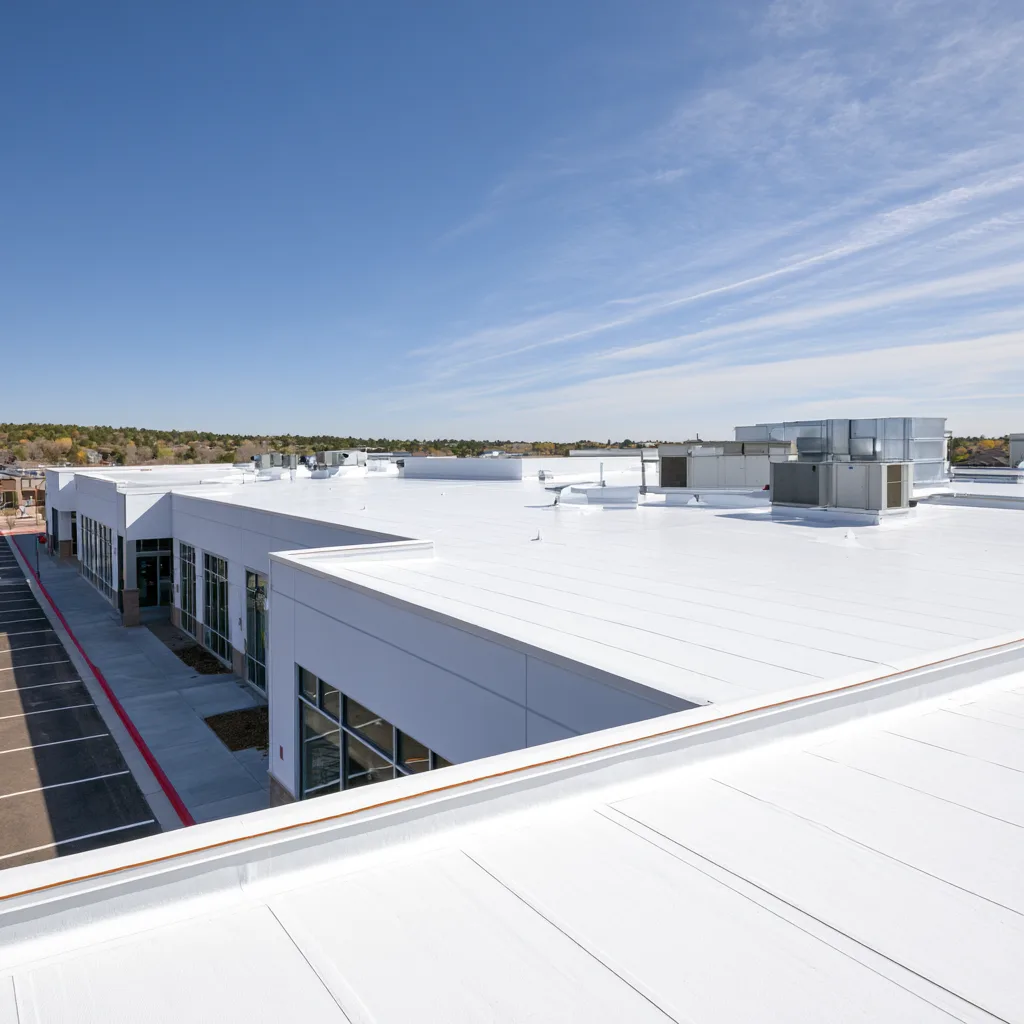
Leaving an existing roof in place and removing it are different scopes with different conditions.
Removal exposes the underlying assembly and deck. It allows wet or unsuitable material to be removed and the new roof to begin from the agreed base.
An additional assembly over an existing roof requires a suitable, dry base and compliance with layer, loading, attachment and other applicable requirements. It is not a shortcut around an unsound roof.
The selected membrane or roofing system is one part of the design. Insulation and drainage must suit the building, while edges and penetrations need details that preserve continuity.
A change in equipment or roof loading can require design and trade coordination beyond the roofing installation. Those boundaries should be resolved in the project scope.
Establish a sound supporting base and an attachment approach suited to the deck and selected system.
Coordinate the thermal assembly and the slope toward primary and overflow drainage.
Resolve curbs, penetrations, edges and any disconnection work required by other trades.
A workable sequence protects the building while each stage is completed.
Coordinate staging, debris routes, roof access and occupied areas with the building’s use.
Sequence removal and installation around conditions and the project’s temporary protection needs.
Retain the installed-system documents, warranty terms and maintenance requirements for future service.
Tell us about the building, its roof system and where water or wear has become a concern. A free roof inspection is a useful place to begin.