Appearance and construction
A dimensional shingle, designer profile and standing-seam panel create different roof lines. The actual product determines its construction and installation requirements.
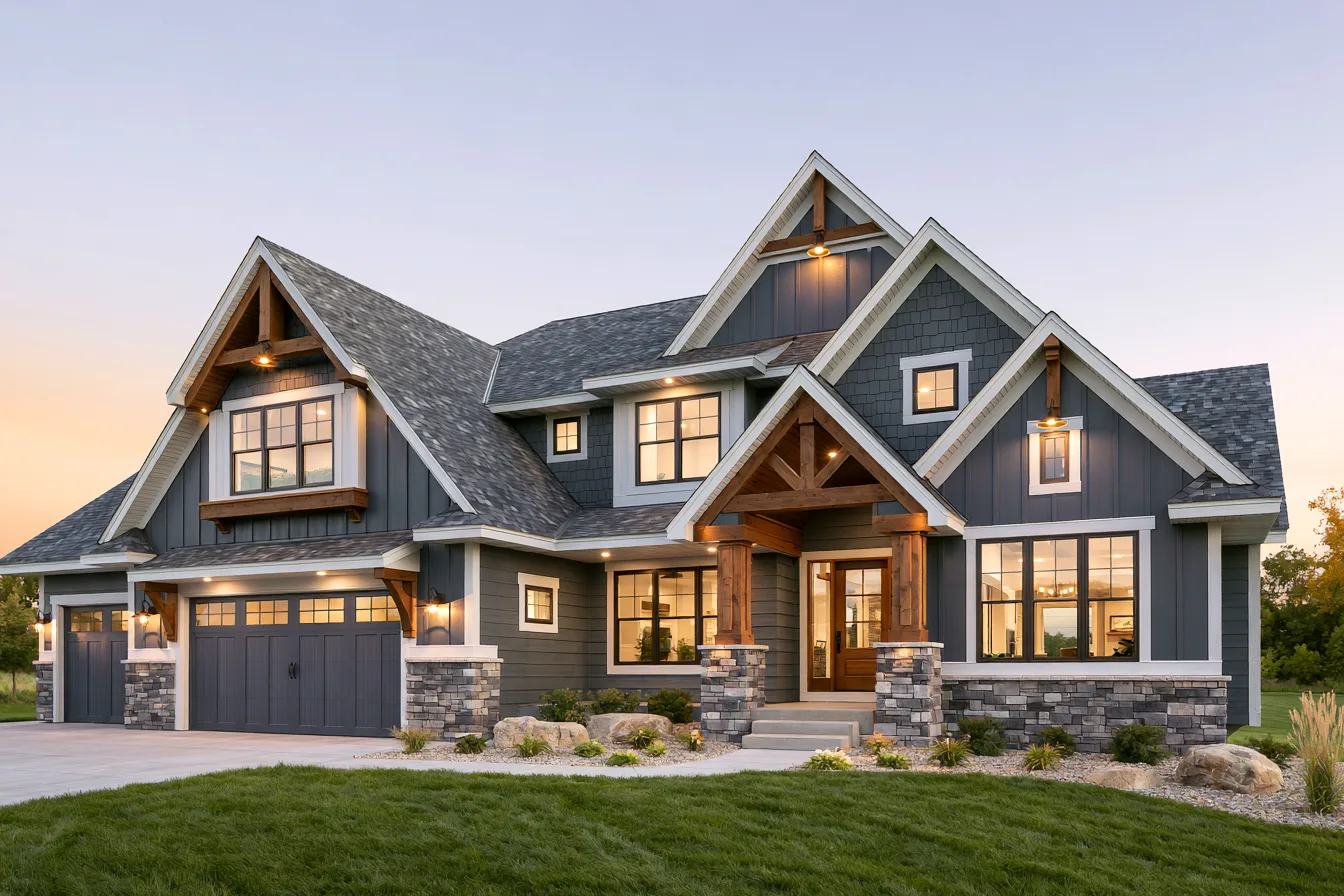
Roofing materials need to fit the slope, supporting assembly and details of the building. Compare the system first, then the profile, color and product choices.
Roofing materials need to fit the slope, supporting assembly and details of the building. Compare the system first, then the profile, color and product choices.
Residential steep-slope coverings and commercial low-slope membranes solve different roofing needs.
| Material | Where it belongs in the discussion | Details that matter |
|---|---|---|
| Asphalt shingles | A suitable steep-slope residential roof, with product choices in profile and performance. | Deck support, underlayment, fastening, flashing and ventilation. |
| Metal panels | A panel system selected for the slope and building. | Attachment, panel movement, edges, valleys and compatible penetrations. |
| Single-ply membrane | A suitable low-slope roof assembly. | Seams, attachment, insulation, drainage, curbs and perimeter details. |
| Restoration coating | An existing roof that meets the selected system’s suitability requirements. | Moisture, substrate condition, compatibility, adhesion and preparation. |
A material choice has more than one useful comparison.
A dimensional shingle, designer profile and standing-seam panel create different roof lines. The actual product determines its construction and installation requirements.
Attachment, flashing and drainage need to remain serviceable over time. Tested material characteristics do not remove the need for a correctly installed and maintained assembly.
The existing deck, roof slope and transitions help define which systems are practical. A low-slope porch or addition can need a different covering from the steeper main roof.
Costs also follow the system. The architectural-asphalt benchmark used on this site does not supply metal, membrane or coating prices.
Compare product categories and impact-testing distinctions.
Understand panel types, attachment and movement.
Follow the low-slope repair, coating and replacement paths.
Tell us what you have noticed and where the property is. A free roof inspection helps put the next decision in focus.